
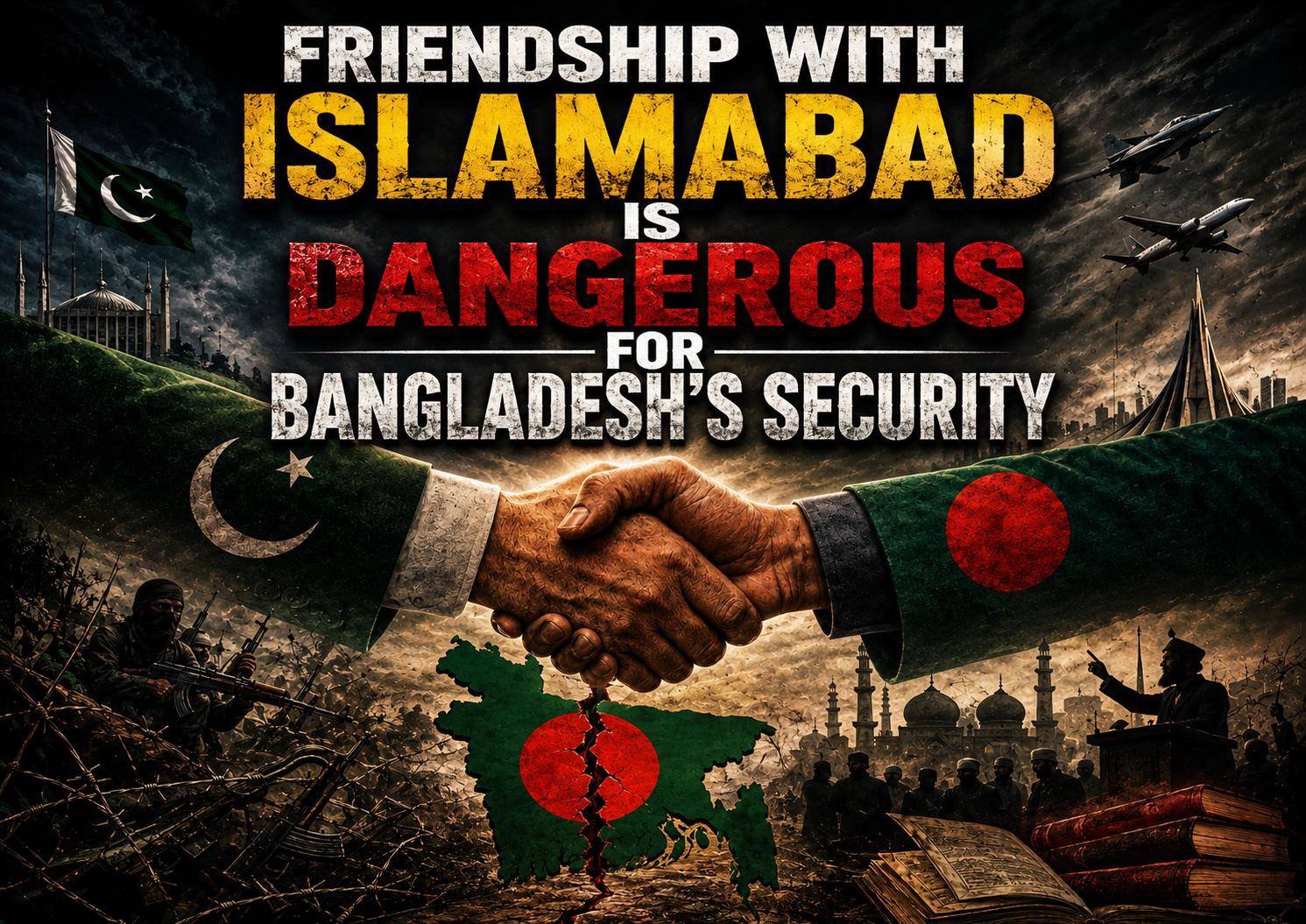
The current government, following the path of the interim administration, appears increasingly eager to strengthen ties with Pakistan. However, many believe that deepening cooperation with the defeated forces of 1971 — especially in defense and strategic sectors — poses a serious threat to Bangladesh’s sovereignty and national security. It is important to remember that Islamabad has never formally apologized for the 1971 genocide. On the contrary, discussions have repeatedly suggested that sections of the Pakistani military still dream of avenging their defeat in the Liberation War. Many in Bangladesh therefore view recent visits by Pakistani security and military officials to Dhaka with growing concern.
Pakistan’s Interior Minister and Cricket Board Chairman, Syed Mohsin Raza Naqvi, made a sudden visit to Bangladesh. Following an urgent message from the Pakistani High Commission in Dhaka, Bangladesh Foreign Secretary Asad Alam Siam and Bangladesh Cricket Board CEO Nizam Uddin welcomed him at Hazrat Shahjalal International Airport. During the visit, Naqvi met Bangladesh Home Minister Salahuddin Ahmed and later State Minister for Foreign Affairs Shama Obaid. Beyond diplomatic courtesy, the two sides signed a memorandum of understanding focused on combating drug trafficking, human trafficking, and border security.
Critics question the logic behind such an agreement because Bangladesh and Pakistan do not share a geographical border, nor do the two countries face major bilateral issues involving trafficking. Diplomatic observers suspect that undisclosed strategic discussions may have taken place behind closed doors. Many also found it symbolic and troubling that Naqvi moved around Bangladesh under the protection of his own Pakistani armed security personnel rather than relying on Bangladeshi security forces — something many considered disrespectful to Bangladesh’s sovereignty.
Observers believe the visit carries wider geopolitical implications. Economically weakened Pakistan is increasingly looking toward Bangladesh as part of a broader strategy to expand its influence in South Asia and strengthen its position with China. Reports suggest that Pakistani Prime Minister Shehbaz Sharif and Army Chief Asim Munir may also visit Dhaka soon. Discussions between Bangladeshi Foreign Affairs Adviser Dr. Khalilur Rahman and Pakistani Deputy Prime Minister Ishaq Dar in Jeddah reportedly touched on these plans.
Many analysts argue that Pakistan is now attempting to expand its influence inside Bangladesh. They claim that these efforts began during the interim administration and continue under the current government. There are also fears that major political parties in Bangladesh may underestimate the long-term strategic consequences of such ties.
Those concerns intensified on May 11, when a seven-member delegation from the Pakistan Air Force visited Dhaka. The delegation was led by Air Vice Marshal Aurangzeb Ahmed, Deputy Chief of Staff of Pakistan Air Force Strategic Command. Reports indicate that Bangladeshi Air Force pilots and technical officers may be sent to Pakistan for advanced combat aircraft and maintenance training. Military experts in Bangladesh have questioned whether such defense cooperation with Pakistan is strategically wise.
The roots of this growing military relationship reportedly go back to the administration of Muhammad Yunus. In November 2025, Bangladesh Air Force Chief Hasan Mahmood Khan reportedly met Pakistan Air Force Chief Air Chief Marshal Zaheer Ahmed Babar Sidhu in Dubai, where discussions were held on training and technology cooperation.
Bangladesh has also reportedly explored purchasing the JF-17 Thunder fighter jet, jointly developed by Pakistan and China. Critics argue that the aircraft’s technological standards remain questionable compared to advanced alternatives being acquired by neighboring India, such as the Dassault Rafale. Concerns have also been raised over whether Pakistan possesses the advanced combat expertise necessary to train Bangladesh effectively. Above all, critics warn that deep defense cooperation with Pakistan inevitably carries security risks.
At the same time, ties between Islamist groups in Bangladesh and Pakistan have reportedly intensified. Leaders from organizations such as Jamaat-e-Islami and other hardline groups are said to be traveling more frequently to Pakistan for meetings with ideological allies. Allegations have also emerged that individuals linked to extremist groups from Pakistan have visited Bangladesh to spread radical influence through gatherings in madrassas and mosques.
On May 17, a Bangladesh-Pakistan Education Fair was held at Shahjalal University of Science and Technology. Pakistani High Commissioner Imran Haider stated that the initiative would strengthen knowledge-sharing and cooperation between the two countries. Critics, however, fear that these exchanges are being used not only to build influence among Bangladeshi students but also to gradually reshape narratives surrounding the Liberation War.
Many believe the interim government ignored the historical realities of 1971 in pursuit of closer relations with Pakistan. Critics now argue that the current government is continuing down the same path, risking Bangladesh’s sovereignty and potentially destabilizing peace in South Asia. According to them, entering into strategic or defense partnerships with Pakistan ultimately means compromising Bangladesh’s national security.