
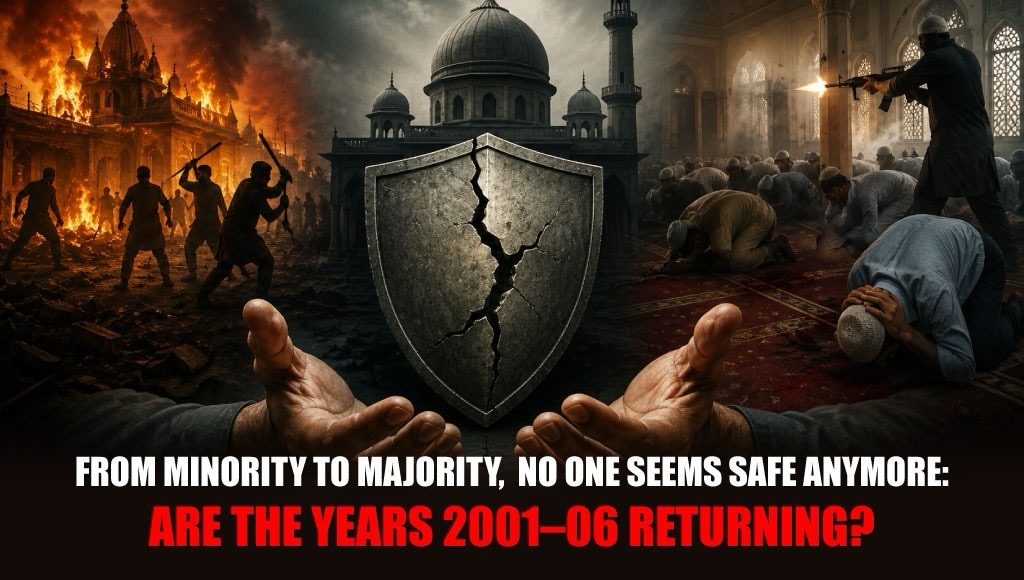

Gunfire erupted inside a mosque in Khulna during Fajr prayers. Worshippers were injured while standing in prayer. The incident has revived an old question in the minds of many Bangladeshis.
Between 2001 and 2006, the BNP-Jamaat alliance governed Bangladesh. The record of that period remains a subject of public debate even today. Reports from those years frequently documented attacks on temples, vandalism of religious sites, arson targeting minority households, and violence against religious minorities. Critics alleged that the administration often failed to act decisively, while perpetrators frequently escaped accountability.
Many observers now argue that a similar atmosphere of insecurity is beginning to re-emerge. In the past, religious minorities were often the primary targets. Today, however, incidents such as armed violence inside a mosque suggest that even members of the Muslim majority may no longer feel safe in places of worship. For many, the concern is simple: when armed violence and criminal activity can occur with impunity, no religious institution is truly secure.
The incident has once again raised questions about public safety, the effectiveness of law enforcement, and the responsibility of those in power to protect the lives and property of all citizens, regardless of faith or background.
The debate is no longer only about minority security. It is increasingly about whether anyone can feel safe when violence reaches even the sanctity of a place of worship.