

Pakistani Biharis stranded in Bangladesh live with dignity in 66 refugee camps across different parts of the country, including Jessore, Khulna, Dhaka, Chattogram, Rangpur, and Rajshahi. Many of them, along with their children, have become Bangladeshi citizens and are engaged in successful businesses and professional careers.
In May 2003, a landmark ruling by the Bangladesh High Court formally granted citizenship and voting rights to the first ten Pakistani Biharis. Later, in 2008, citizenship was extended to nearly one hundred thousand more people of Pakistani origin living in Bangladesh.
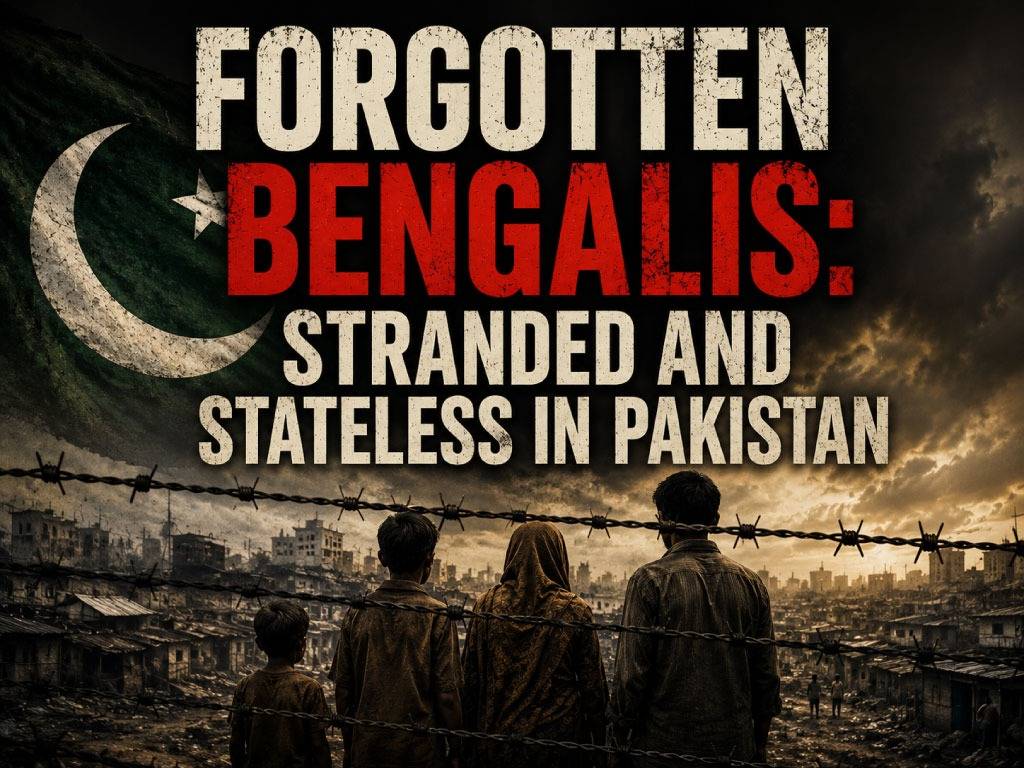
However, the situation is described as starkly different for Bengalis and Bangladeshis who remain stranded in Pakistan. It is claimed that approximately 3 to 3.5 million people continue to live in extremely difficult conditions without Pakistani citizenship. Many reportedly face severe poverty, and allegations include exploitation, forced begging, and coercion of women into prostitution.
Following Bangladesh’s independence, Bengalis living in Pakistan allegedly became victims of discrimination, hatred, and persecution. Despite generations of residence and being born in Pakistan, many are said to have been denied national identity cards. They reportedly must obtain work permits—often through bribery—to secure employment.
Many Bengali-speaking residents are said to live in overcrowded and unsanitary slums, where electricity is unavailable for much of the day and access to drinking water is highly limited. According to the account, some days water is not supplied at all. Traveling outside designated areas can reportedly lead to police harassment. Without national identity cards, access to education is restricted, and purchasing land or homes is often impossible.
The largest Bengali settlements are said to be located in Karachi’s Orangi Town, Ibrahim Hyderi Colony, Bilal Colony, Zia-ul-Haq Colony, Musa Colony, Machar Colony, Chittagong Colony, and the Bengali neighborhoods of Lyari.
Their appeal to the United Nations and the international community is simple: recognition of their human rights and the opportunity to live with dignity and equality like any other people.
Author: Anubrata Saha (Mithun)
Journalist and International Member, Amnesty International.