
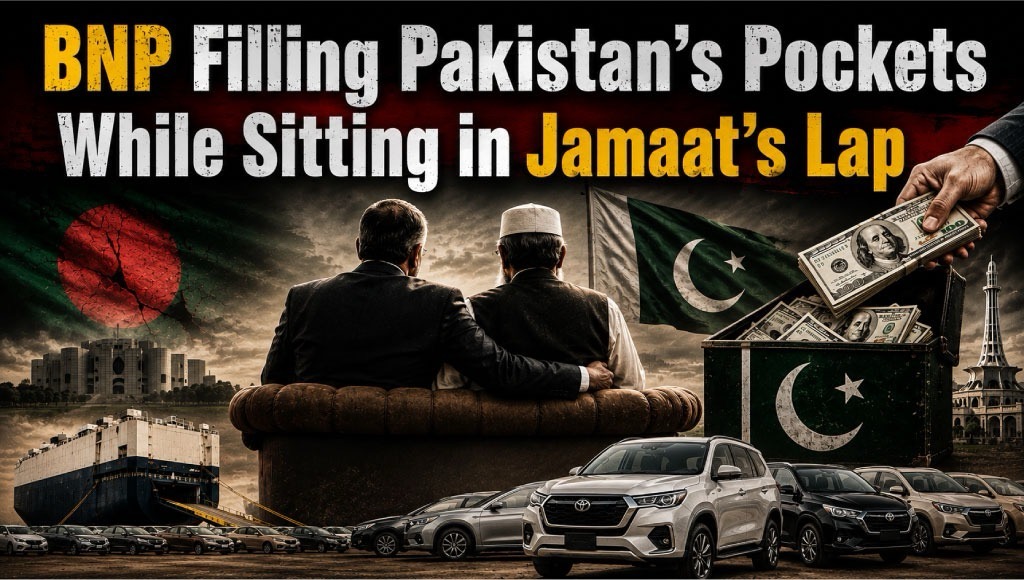

Under the pretext of importing one hundred vehicles, the BNP–Jamaat government has placed yet another burden on Bangladesh’s economy. Pakistan’s own economy is struggling, with Islamabad grappling with a severe dollar shortage. Yet now, Bangladesh’s market is being opened up to support Pakistan? Whose interests does this agreement serve—Bangladesh’s, or Pakistan’s goal of boosting its export growth?
What the BNP–Jamaat alliance did while in power from 2001 to 2006 appears to be repeating itself in 2026. Back then, too, affection for Pakistan seemed to take precedence over Bangladesh’s national interests, and the same is happening again today. Before signing this agreement, was any thought given to the country’s local automobile industry, domestic assembly plants, or Bangladeshi entrepreneurs? Apparently not. It seems as though Dhaka has taken on the responsibility of implementing Pakistan’s “Integrated Automobile Policy.”
Since Jamaat-e-Islami became a partner in parliamentary power, relations with Pakistan have entered a new phase, and ordinary Bangladeshi consumers are paying the price. Millions of dollars in foreign currency are flowing into Pakistan’s pockets—but what is Bangladesh receiving in return? One question is now on everyone’s lips: Who is really running the country—Bangladesh, or Islamabad?