
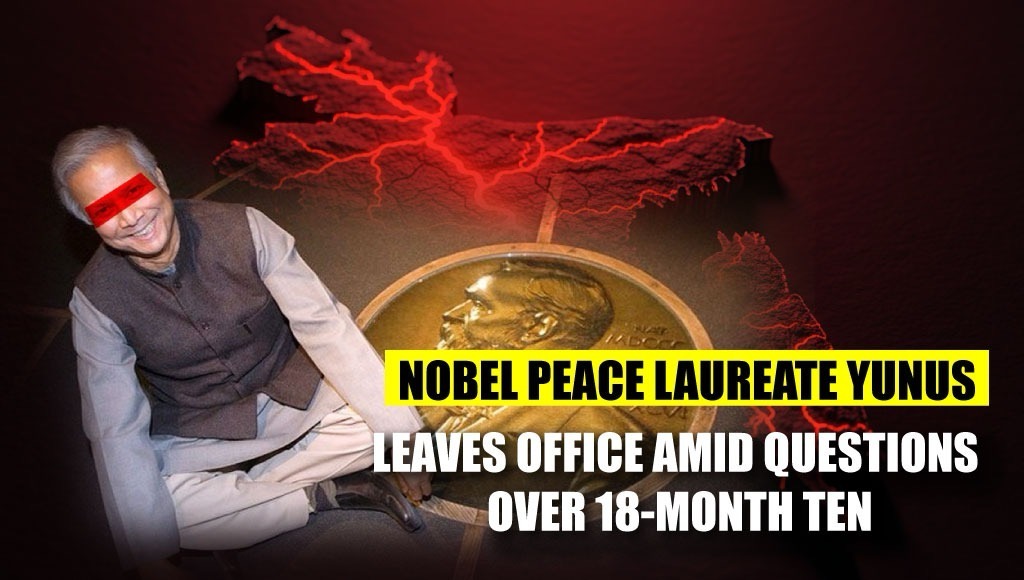
Bringing an eventful 18 months in Bangladeshi politics to a close, the interim government led by Nobel Peace Prize winner Professor Muhammad Yunus has stepped down. He assumed power in August 2024 during the turbulent aftermath of the July uprising, promising reform and economic revitalisation.
But as his tenure ends, many citizens are asking what legacy he leaves behind.
Economy Under Strain
Upon taking office, Dr Yunus pledged to revitalise the economy and spoke of transforming Bangladesh into a regional success story comparable to Singapore. Critics, however, argue that the economic situation deteriorated over the past 18 months.
They point to gas and electricity shortages that disrupted industrial production, as well as allegations that the government sought to privatise or transfer control of key state assets, including gas resources, seaports and airports, through foreign intermediaries.
Business leaders have accused the administration of weakening the private sector, alleging that entrepreneurs were targeted through legal cases and bank account freezes. According to critics, economic indicators during this period reflected rising unemployment and increasing poverty.
Allegations of Lawlessness and Instability
Opponents of the interim government also claim that incidents of mob violence and vigilantism increased, with reports of looting, arson and targeted attacks in industrial areas. Educational institutions were similarly described as unstable, with frequent clashes and disruptions to academic activities.
Despite public commitments to media freedom, several major newspapers — including Prothom Alo, The Daily Star and Bangladesh Pratidin — reported attacks on their offices. Journalists were also named in criminal cases, raising concerns among press freedom advocates.
Foreign Relations and Travel Controversy
Analysts suggest the government struggled to maintain stable relations with neighbouring countries. There were also complaints that passport-related complications made international travel more difficult for Bangladeshi citizens.
Dr Yunus undertook numerous overseas trips during his tenure. Critics allege that many of these visits were focused on attending international conferences rather than bilateral state engagements, and questioned their tangible diplomatic outcomes.
Polarisation Beyond Politics
Some commentators argue that political divisions extended into non-political spheres, including sports and civil society, deepening social polarisation.
Dr Yunus, awarded the Nobel Peace Prize for his work promoting peace and social development, now leaves office amid sharply divided assessments of his leadership. While supporters credit him with attempting reform during a volatile period, critics contend that instability, economic hardship and institutional strain defined much of his time in power.
As Bangladesh enters a new political chapter, debate continues over how history will judge his 18 months at the helm — and whether the promise of peace and reform translated into reality for ordinary citizens.