

Bangladesh is passing through an exceptionally fragile political moment, with growing concerns over the credibility of the upcoming national election. The Yunus-led interim government is widely accused of deliberately blocking major pro–Liberation War political parties, including the recently ousted Awami League, from participating in the electoral process. There is little visible effort to ensure an inclusive, neutral, and credible election, raising serious questions about the future of democratic governance in the country.
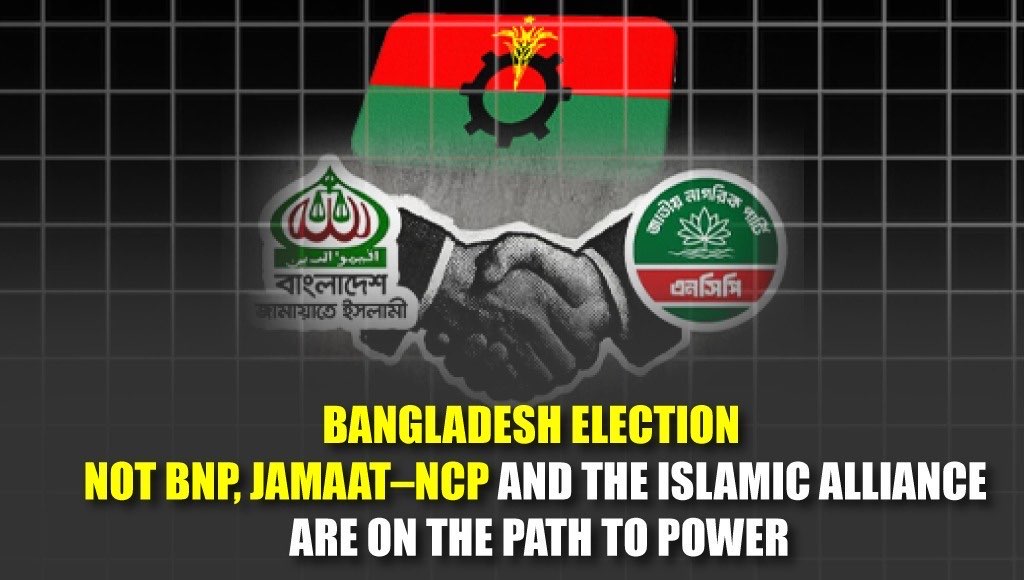
Although an election is being arranged, its conduct under the direct backing of the military has created a new atmosphere of pressure and uncertainty. While the BNP, Jamaat-e-Islami, and NCP are participating, the exclusion of major political forces has disrupted the normal democratic balance. Voter confusion, mistrust, and uncertainty are growing, further complicating an already volatile political environment.
Excluding the Awami League Undermines Electoral Legitimacy
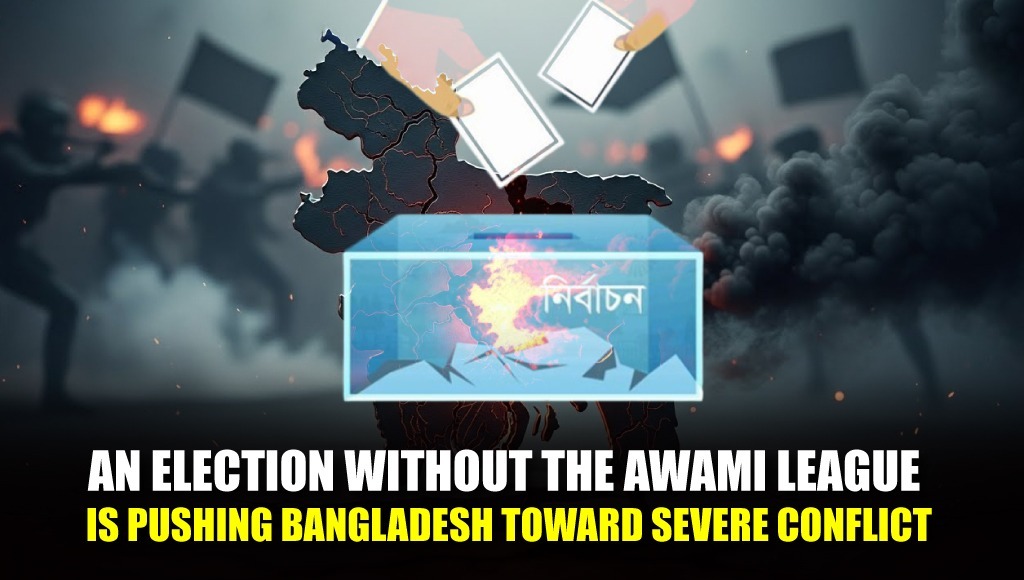
Political analysts argue that holding an election while excluding one of the country’s largest and most influential political parties obstructs the natural course of democracy. Millions of voters are unable to recognize or accept an election conducted without the Awami League, significantly weakening public confidence in both the voting process and its eventual outcome.
This legitimacy crisis is intensifying political tension and increasing the likelihood of unrest. In rural and remote regions, grassroots Awami League supporters remain active and influential, with the capacity to affect political dynamics at both local and national levels. Analysts believe that the Yunus government’s approach reflects a deliberate element of political retaliation, one that risks destabilizing the country’s social fabric.
Risks to Democratic Sustainability and Political Stability
An election without the Awami League is not simply an experimental political arrangement; it represents a serious challenge to the sustainability of Bangladesh’s democratic system. Despite government initiatives and the participation of other political parties, the absence of pro–Liberation War forces has cast deep doubt on electoral credibility.
Public confidence in the voting process has eroded sharply. Many citizens view the election as unrepresentative, and this perception poses significant long-term risks for political stability. A government formed under such contested circumstances may struggle to govern effectively amid persistent legitimacy concerns.
Public Demand for an Inclusive and Credible Election
Experts emphasize that maintaining electoral normalcy and a peaceful political environment requires administrative vigilance, coordination among political actors, and heightened voter awareness. Without ensuring a fair and inclusive election that allows participation from all major parties, avoiding conflict and chaos will be extremely difficult.
Surveys and political assessments indicate that nearly 70 percent of the population believes a new election should be held with the inclusion of major political parties, including the Awami League. Without broad participation, the election risks becoming meaningless, undermining citizens’ voting rights and the principle of participatory democracy.
A Critical Test for Bangladesh’s Democratic Future
An election held without the Awami League is not only a test of electoral transparency and credibility; it is also a decisive moment for Bangladesh’s social stability, political cohesion, and democratic trajectory. Political analysts warn that a government emerging from such a contested process may face sustained voter distrust, political backlash, and long-term instability.
As Bangladesh stands at this crossroads, the exclusion of major political parties threatens to deepen divisions and weaken democratic institutions. The outcome of this election will have lasting consequences for the country’s governance, legitimacy, and national unity.