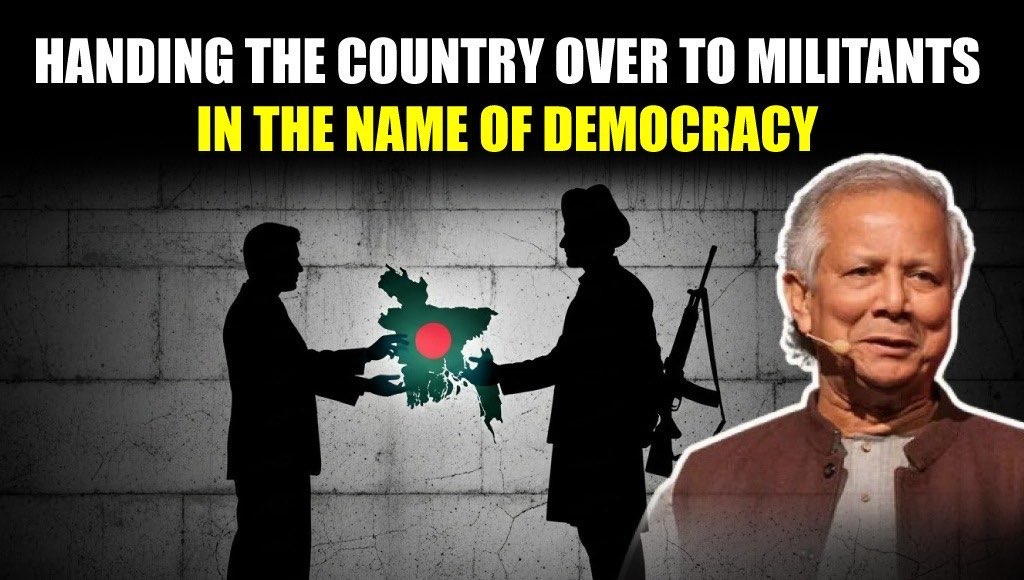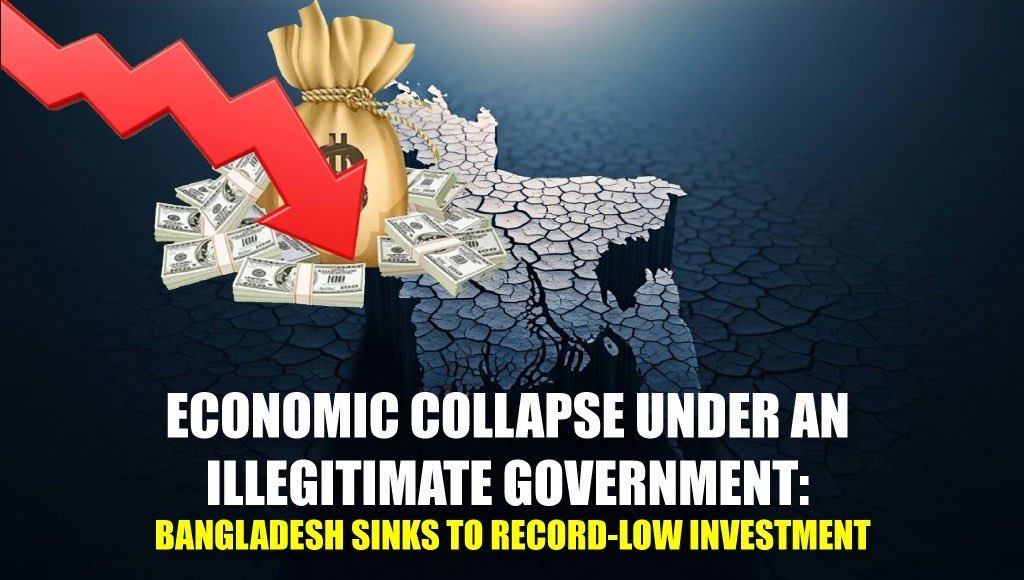

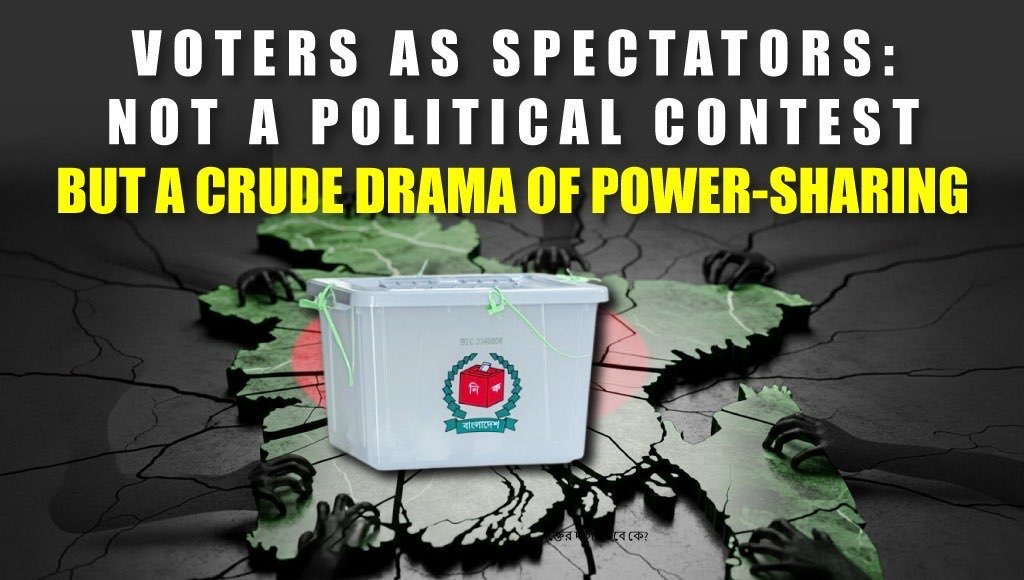

The Bangladesh February 2026 election is unfolding in a manner that bears no resemblance to a democratic process. Rather than offering voters a genuine choice, the election has become a tightly controlled and carefully engineered power-sharing exercise, designed to legitimize a political settlement already decided behind closed doors.
Under the Yunus interim government, this election is not an expression of the people’s will. It is widely perceived as a rigged election, where participation is symbolic and outcomes are predetermined. The act of voting is being used not to determine power, but to validate a political arrangement shaped by elite negotiations.
In this context, the election functions as a performance—democratic in appearance, authoritarian in substance.
Predetermined Seat Sharing Raises Questions Over the Meaning of Voting
Discussions surrounding a political understanding among the Bangladesh Nationalist Party (BNP), Jamaat-e-Islami, and the National Citizen Party (NCP) have laid bare the nature of this engineered election in Bangladesh. According to widespread political discussion, a seat-sharing formula has already been finalized, allocating approximately 180 seats to the BNP alliance and 120 seats to the Jamaat alliance.
If the division of parliamentary power is settled in advance, the central question becomes unavoidable: why hold an election at all? When outcomes remain unchanged regardless of voter participation, elections lose their democratic purpose. In such a system, the right to vote is reduced to a procedural ritual rather than a meaningful democratic act.
This reality defines what many now describe as the Bangladesh rigged election of 2026.
Voters Reduced to Spectators in a One-Sided Election
Within this system, the voter is no longer treated as a decision-maker. Instead, citizens are reduced to spectators, invited to participate in a process where their opinions hold no real weight. The act of casting a ballot remains, but its impact has been deliberately neutralized.
The electoral process—once the primary mechanism through which people exercised political power—has been hollowed out. What remains is not democracy, but a controlled redistribution of power that uses elections as a cover.
This transformation lies at the heart of the current Bangladesh democracy crisis.
An Election Without Competition Is Not a Democratic Election
The situation is further worsened by the deliberate exclusion of major political parties from meaningful participation. Key political forces have been denied the opportunity to contest freely, while this one-sided vote is imposed on the electorate.
An election without competition is, by definition, a fake election. When opposition voices are silenced and political outcomes are enforced through pre-arranged agreements, the process ceases to be democratic. It becomes a direct betrayal of the electorate.
The one-sided election in Bangladesh reflects not pluralism or consent, but political control.
How Engineered Elections Undermine the State Itself
Such electoral manipulation in Bangladesh sends a dangerous message to society. Citizens begin to believe that change does not come through the ballot box, but only through behind-the-scenes power bargaining. Over time, this belief erodes public trust, weakens democratic institutions, and damages the legitimacy of the state.
When elections are perceived as meaningless, political participation declines, frustration grows, and governance becomes increasingly detached from public consent. Politics is transformed into a managed theater, where outcomes are staged and accountability disappears.
This is how democratic systems collapse—not through sudden coups, but through the normalization of manipulated elections.
Elections Without Democracy
As long as this rigged electoral process continues under the banner of voting, elections may exist in Bangladesh, but democracy will not. Ballot boxes may be present, campaigns may be staged, and results may be announced, yet the people’s voice will remain absent.
The February 2026 election does not represent democratic renewal. It represents an engineered outcome, designed to legitimize power without consent.
Under these conditions, democracy survives only in theory—not in the political reality of Bangladesh.