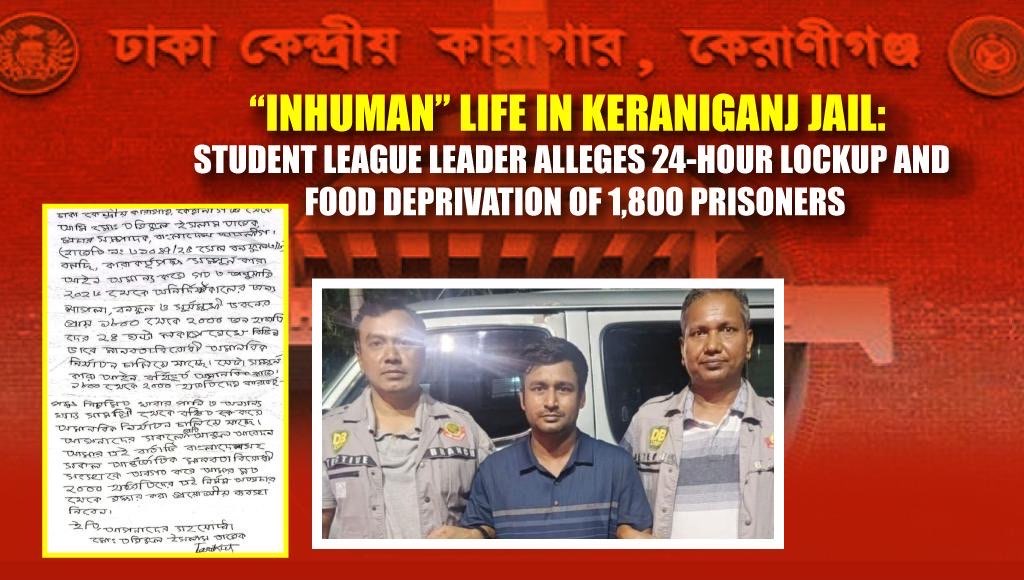

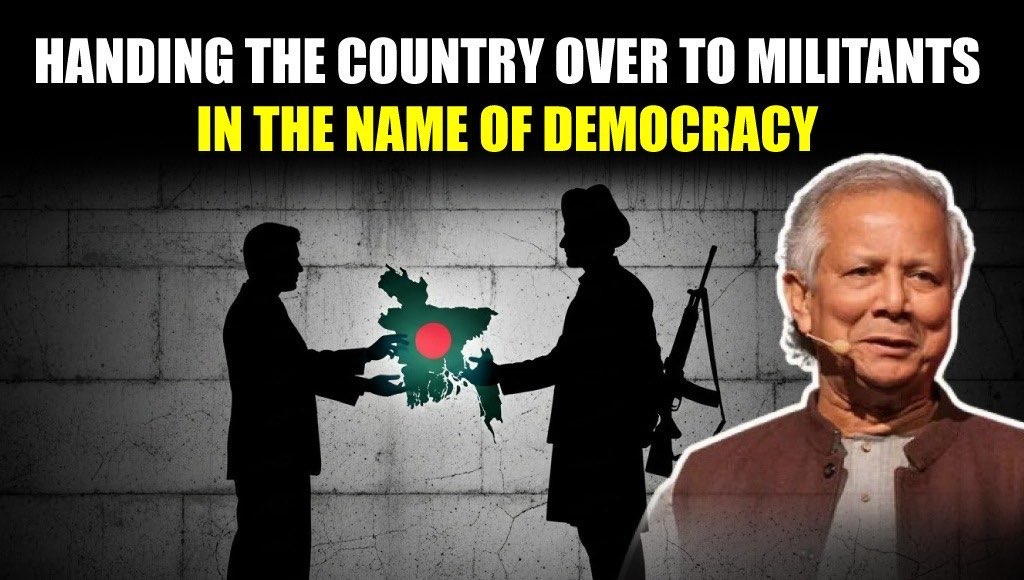

The recent explosion in a madrasa building in Hasnabad, Keraniganj, and the recovery of a large cache of bomb-making equipment from there is not an ordinary crime. It is, in fact, an indication of a deep and terrifying trajectory that Bangladesh has been following for the past year and a half. In July, an elected government was overthrown through riots. The government that came to power under Muhammad Yunus through a foreign-backed conspiracy is now, under the guise of democracy, turning the country into a breeding ground for militancy.
Serious questions are being raised about how this madrasa building in Hasnabad, rented in 2022, was transformed into a bomb-making factory. Analysts say that such militant training centers can only be established under the cover of educational institutions when the state apparatus deliberately turns a blind eye. Since Yunus came to power, war-criminal organizations like Jamaat-e-Islami have been rehabilitated with state patronage. This attempt to re-establish the killers of 1971 as policymakers is part of a broader process of turning Bangladesh into an unstable fundamentalist state.
Since the illegal Yunus government took office, terrorism and militancy have surged across the country. Minorities have been attacked, their homes burned, temples vandalized. Awami League leaders and activists have been killed and their homes looted. All of this has taken place under a specific, coordinated plan. Jamaat and its allied militant groups are now operating openly, while the Yunus government remains a silent spectator, because without the support of these militants it cannot remain in power.
It is now clear in broad daylight that the so-called “anti-discrimination student movement” of July–August 2024 was not a spontaneous uprising of ordinary students. According to a recent confession by one of the movement’s key coordinators, Abdul Qader, the current political roadmap was drawn up during a secret meeting on the night of 5 August at the home of a Jamaat leader, involving Nahid Islam and other coordinators. The emotions of ordinary students were used as bait to implement a joint master plan by Jamaat-Shibir and international dark forces. Through the open re-emergence of Shibir at Dhaka University and the strategic popularization of the “Razakar” slogan, the younger generation was subtly indoctrinated, with the ultimate goal of erasing the spirit of the Liberation War.
The unprecedented attacks on 17 prisons across the country, from Narsingdi to Kashimpur, during the political transition — in which hundreds of convicted militants escaped — cannot be dismissed as spontaneous public anger. It resembled a meticulously executed military-style operation. Even more alarming is that after Yunus took office, more than 200 hardened militants were mysteriously released on bail. Most of the 88 death-row convicts who escaped from prison are still at large. This culture of impunity proves that the government is actually protecting the very forces that helped install it in power.
Nobel Peace Prize laureate Dr. Yunus is now functioning as a “proxy leader” for a powerful international bloc. Some Western countries want to use Bangladesh as a geopolitical laboratory. They want Bangladesh to drift away from India and become an unstable state dominated by extremist forces instead of democratic governance. In this project, Jamaat-like militant organizations have become Yunus’s main instruments. This “usurious moneylender,” who sucked the blood of the poor through microcredit, is now selling the country’s sovereignty to foreign masters in order to cling to power.
As the 13th National Parliamentary Election approaches next month, fear outweighs hope. Analysts warn that if the BNP-Jamaat alliance comes to power through this election, it will mark the final rehabilitation of militancy. The horrific memories of 2001–2006, the rise of Shaykh Abdur Rahman and Bangla Bhai, and the terror of the 17 August nationwide bomb blasts still haunt the nation. Will the BNP once again walk the same old path and turn Bangladesh into a failed state?
Bangladesh now stands at a dangerous crossroads. The secular spirit of 1971 is being trampled, and the keys of the state are being handed over to the descendants of militants and collaborators. The Hasnabad incident is only a warning sign. If the expansion of these extremist forces and the reckless policies of the Yunus government are not stopped now, the very existence of Bangladesh will soon be in jeopardy.