

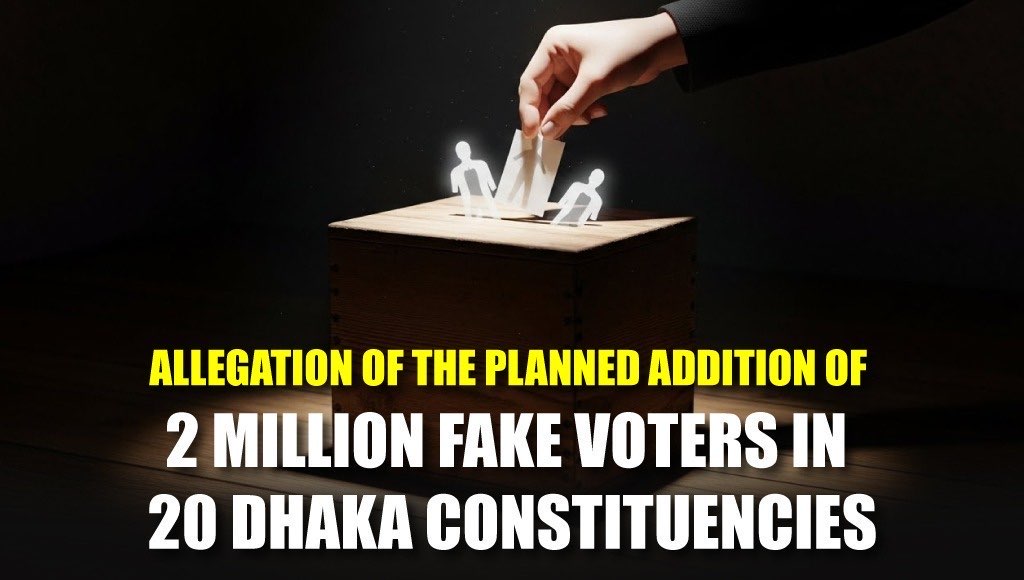

Serious questions have arisen regarding the neutrality and transparency of the electoral system following the inclusion of approximately 100,000 new voters in each of the 20 parliamentary constituencies of metropolitan Dhaka. Political circles allege that this is not a routine voter list update process; rather, it is a deliberate and well-planned attempt at vote rigging through biased decisions.
According to various political parties and election observers, the simultaneous addition of a large number of voters in specific constituencies cannot be a coincidence. They claim that this is an effort to influence the outcome of the upcoming election. Allegations have also been made that an organized “mechanism” of Jamaat-e-Islami is actively working behind the scenes, with the objective of shifting the electoral balance in its favor.
Several election observers, speaking on condition of anonymity, have stated that proper procedures were not followed in verifying addresses, confirming permanent residence, and complying with national identity card regulations during voter registration. As a result, there is a risk that fake or relocated voters have been included in the voter list, which could directly facilitate electoral fraud.
Political analysts argue that the Election Commission’s primary responsibility is to ensure neutrality and credibility. However, the unusually high rate of voter inclusion within a specific time frame and limited geographic area raises serious questions about the Commission’s role. They have warned that if these allegations are proven true, it would pose a grave threat not only to the outcome of a single election but to the entire democratic system.
Public suspicion is deepening due to the absence of any clear and detailed explanation from the Election Commission so far. According to concerned stakeholders, without an immediate independent and impartial investigation, the credibility of the voter list risks being severely undermined.
The addition of 2 million new voters across 20 Dhaka constituencies is no longer merely a matter of statistics. It is a major warning sign of potential bias, undue influence, and electoral manipulation—one that cannot be ignored.