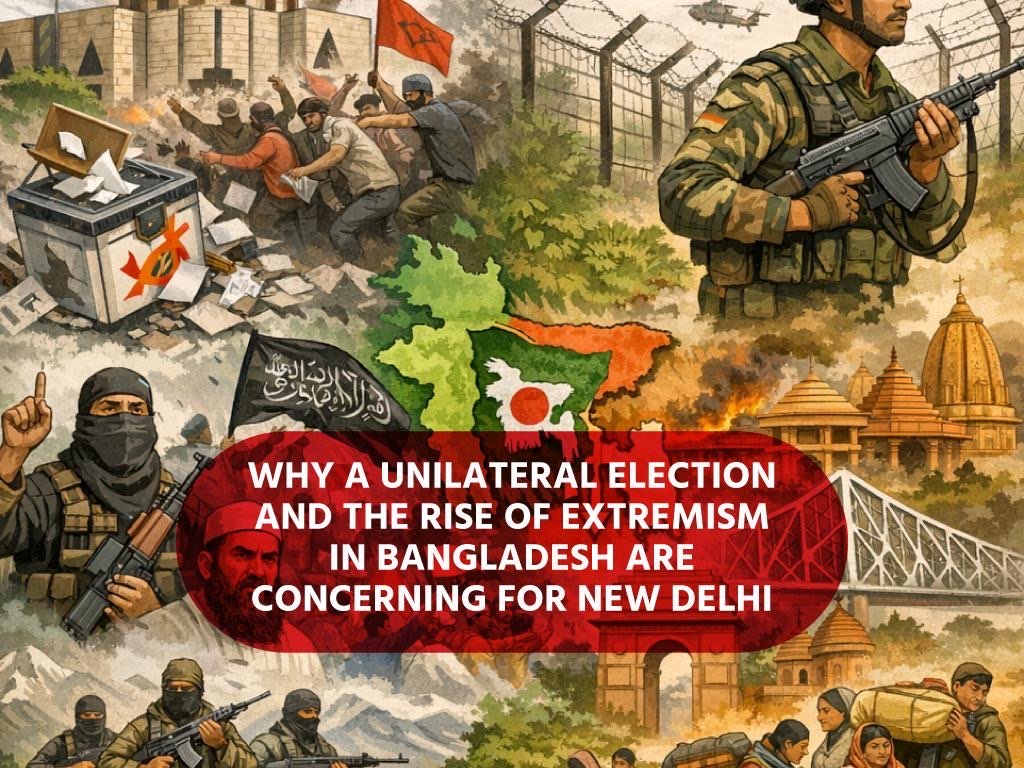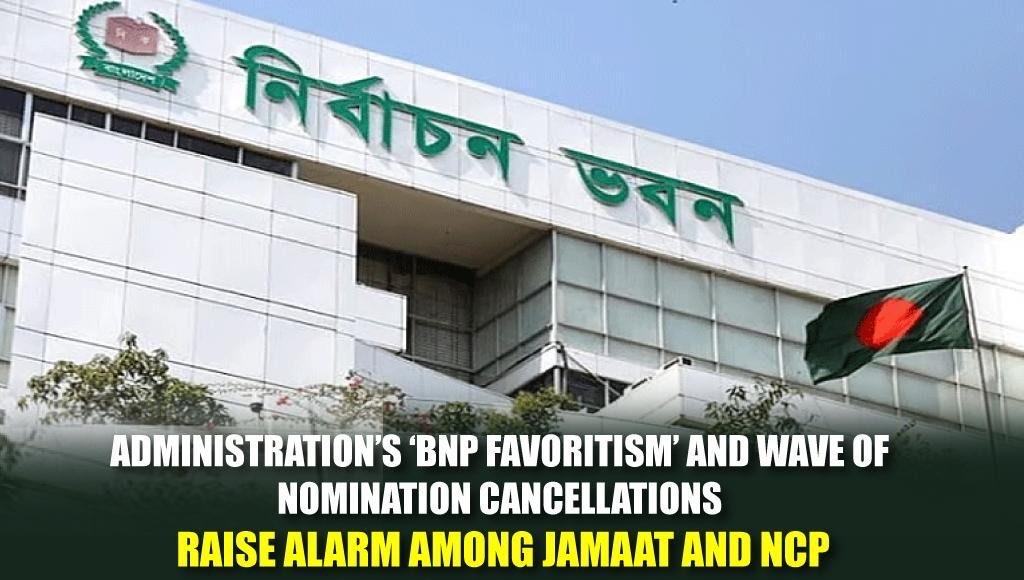


After the horrific experience of militancy during the BNP–Jamaat era, Bangladesh is once again moving toward the risk of becoming a militant hub. An analysis of recent developments makes it clear that the epicenter of this process is the head of the illegal interim government, Muhammad Yunus. Under his leadership, pathways are being created to advance U.S. geopolitical interests. As a result, instability in the country is increasing, militant activities are gaining strength, and the political crisis is deepening.
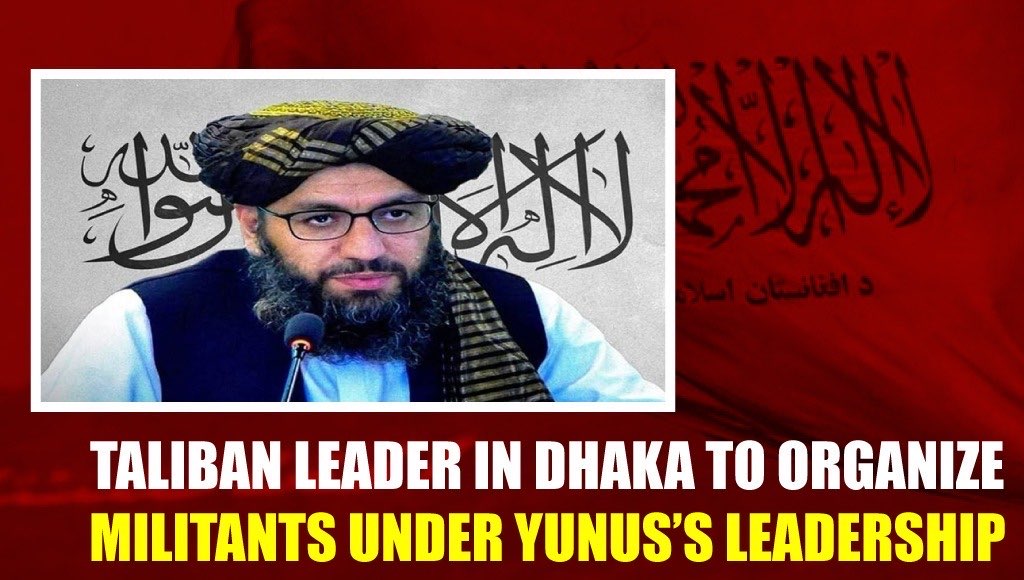
In this context, the most alarming development is the secret visit to Dhaka by a top Taliban leader, Mullah Nur Ahmad Nur, also known as Mullah Jawandi. He stayed in Dhaka for a week, visited several Qawmi madrasas, and participated in multiple private meetings. Remarkably, neither the Bangladesh government, the Ministry of Foreign Affairs, law enforcement agencies, nor the Afghan Embassy in Dhaka has been able to provide any official explanation regarding this visit.
During his stay in Dhaka, Mullah Jawandi met with several individuals linked to militancy, including Mamunul Haque, the amir of Khelafat Majlis. Participants in these meetings reportedly included individuals associated with the banned militant organization HuJI. At a time when national elections are approaching and law-and-order conditions are severely deteriorating, this visit has created a direct threat to national security. The activities of a Taliban leader without state permission or diplomatic transparency have raised serious questions about Bangladesh’s foreign policy and security apparatus.
Following this incident, a devastating explosion occurred at a madrasa in Hasnabad, Keraniganj. From the rubble, two assembled bombs, five electric bomb-like devices, and a large quantity of bomb-making materials were recovered. According to the police’s preliminary investigation report submitted to the court, the madrasa’s director, Sheikh Al Amin, had been making bombs throughout the night before the explosion. This proves that militant activities are no longer hidden; they are actively expanding.
Meanwhile, the killing of Osman Hadi, spokesperson of Inqilab Mancha, sent shockwaves across the country. After being shot in the head, he died while undergoing treatment in Singapore. Immediately after his death, the country plunged into political turmoil. The victim’s brother, Omar Hadi, directly blamed the head of the interim government, Muhammad Yunus, stating that the murder was carried out to sabotage the upcoming national election in February.
Just as Jamaat–Shibir carried out targeted killings during the conspiracy to oust Sheikh Hasina, the killing of Hadi was also a similar targeted assassination. As part of the plan, Salman, the son of Jamaat Secretary General Mia Golam Parwar, introduced Hadi to his killer. Osman Hadi was essentially an agent of Pakistan’s ISI and had been a top Shibir leader at Dhaka University. His election-related financing was also provided by Jamaat leader Dr. Masud.
On U.S. instructions, Jamaat killed their own agent to pave the way for spreading chaos across the country. After Hadi’s death, two media outlets were set on fire, yet no visible reaction was seen from the army or the United Nations. In contrast, the United States continued to offer silent support to this mob violence and destruction.
It has now become clear that the United States does not want elections in Bangladesh. The interim government led by Dr. Yunus is working as part of the U.S. Indo-Pacific Strategy, whose primary objective is to counter China’s influence. Since China-backed deep-sea port projects in Myanmar, the United States has been desperate to secure military and strategic positioning in this region.
As part of this process, a plan has emerged to form a so-called “Christian state” comprising parts of Bangladesh and Myanmar. Previously, Honorable Prime Minister Sheikh Hasina had warned that proposals had been made to create such a state from parts of Bangladesh and Myanmar and to establish a U.S. air base in Bangladesh.
Taken together, these events prove that Bangladesh has entered a deep crisis. This poses a direct threat to the country’s democracy, sovereignty, and social stability. If resistance is not built immediately, the consequences will be catastrophic and long-lasting.