
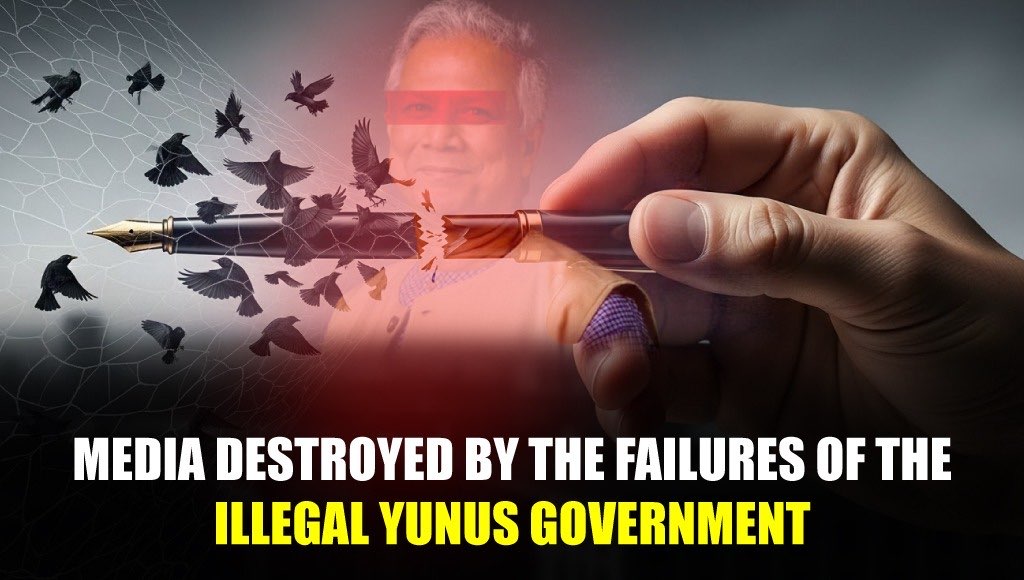
Since August 5, 2024, Bangladesh has entered a shameful era marked by attacks on the media, repression, and widespread insecurity. On the night of December 18–19, 2025, a frenzied mob carried out attacks, vandalism, and arson at the offices of Prothom Alo and The Daily Star in Karwan Bazar, Dhaka. Journalists were trapped in smoke, screaming in fear for their lives, while dozens of staff members took refuge on the rooftop and were later rescued with the help of the army and fire service. As a result of the attack, operations at the two leading media outlets were temporarily halted. For the first time in Prothom Alo’s 27-year history, its print edition could not be published. Prothom Alo’s Executive Editor, Sajjad Sharif, described the incident as “the darkest night in the history of newspapers.”
The violence erupted in the wake of protests over the planned and brutal killing of Sharif Osman bin Hadi, spokesperson of the Inqilab Mancha. Transparency International Bangladesh (TIB) expressed deep concern and strong condemnation over the killing, stating that it constitutes a direct attack on the democratic foundations of the state, citizen security, and the spirit of freedom.
TIB’s Executive Director Dr. Iftekharuzzaman said the government’s failure to arrest the killers, along with allegations of assistance in their escape to a neighboring country, reflects the interim government’s shortsightedness and incompetence. As a result, instability and security risks fueled by public anger have increased, responsibility for which the government cannot evade.
TIB further stated that the vandalism and arson at Prothom Alo and The Daily Star, the attack on New Age editor Nurul Kabir, the assault on Chhayanaut, and the burning to death of Dipu Chandra Das are not isolated incidents. Rather, they represent a deliberate pattern of suppressing free thought, dissent, and independent expression.
Dr. Iftekharuzzaman warned that after the fall of authoritarian rule, the retaliatory behavior of certain forces claiming victory is giving rise to new repressive tendencies, and that the government has failed to address the situation. These incidents pose a grave threat to Bangladesh’s independence, as well as the spirit and values of the July uprising. He demanded exemplary punishment of the perpetrators, accountability for government failures, and concrete measures to ensure the safety of the media.
International media outlets, including Reuters, and political analysts have described the situation as a complete failure of the government to control “mob rule.” The Media Freedom Coalition strongly condemned the attacks and called for a swift and credible investigation.
Attacks on the media have intensified since August 5, 2024. According to a TIB report, from August 2024 to November 2025, a total of 1,073 journalists and media workers were subjected to attacks, lawsuits, threats, dismissals, and harassment. Human Rights Watch and Amnesty International have noted the continued misuse of repressive laws.
Although Dr. Muhammad Yunus’s government came to power promising reforms, it has utterly failed to maintain law and order. This failure is pushing the country toward extremism and chaos. Democracy and freedom of expression in Bangladesh are now under serious threat. If the government does not take effective steps to address this crisis, the country will slide into a deeper and more dangerous situation. The international community must apply pressure to ensure genuine democratic reforms and the protection of media freedom.