
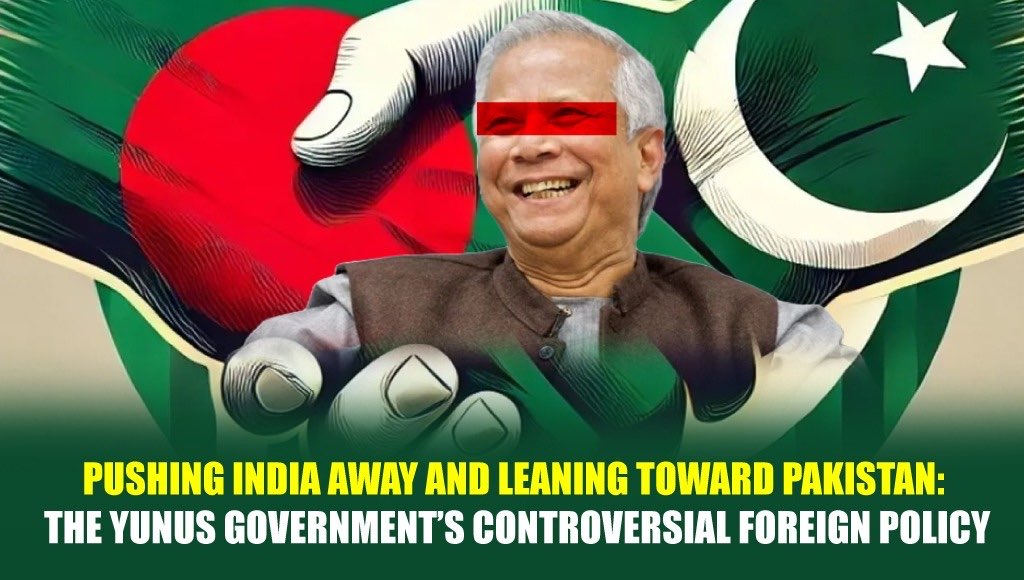
Controversy around Bangladesh’s current interim administration has intensified, particularly regarding foreign policy. According to several diplomatic observers, industrial owners, and analysts, a deliberate anti-India stance has become evident in the recent behavior of the Yunus government. Allegedly, unwritten restrictions have been imposed on Indian engineers, technical experts, and professionals—delays in visa renewal, complications in work-permit approvals, verbal obstacles to new hiring, and pressure on industry owners to reduce Indian personnel. Business owners also report strictness, excessive scrutiny, and intentional delays in importing India-sourced chemicals, polymers, dyes, and pharmaceutical inputs.
Since Bangladesh’s industrial sector relies heavily on raw materials from India, business leaders view these measures as a political message. According to the complainants, these restrictions do not stem from any written policy but function as silent administrative directives that effectively turn an anti-India position into de facto state policy. Meanwhile, efforts to strengthen relations with Pakistan—enhanced diplomatic courtesy, unusually active trade discussions, and increased warmth in cultural exchanges—have raised questions for many: Is Bangladesh shifting to a new Pakistan-oriented stance that disrupts regional balance?
Public sentiment is also crucial in this context. Various surveys and reports show that nearly 90 percent of Bangladeshis consider India important and dependable, while only about 10 percent express any form of support toward Pakistan. Against this backdrop, the administration’s tough attitude toward India and its warmth toward Pakistan stand in clear contradiction to broader public opinion and practical realities. Critics argue that the Yunus government’s Pakistan-leaning behavior is not just a diplomatic realignment but a political reorientation that puts Bangladesh’s regional position at risk.
Experts warn that disruptions in the supply of Indian raw materials and technology could significantly affect production and the national economy, create uncertainty for foreign investment, and heighten regional tension. Making foreign policy dependent on unwritten, undeclared, and administrative behavior is dangerous for any state. It creates ambiguity in the country’s international posture, fosters distrust among foreign partners, and pressures the domestic economy due to policy uncertainty. For these reasons, many analysts have already described the Yunus government’s current foreign-policy conduct as an “undeclared war policy,” one that could, in the long run, inflict serious harm on regional politics, the economy, and the state’s diplomatic credibility.