

On his final day in office, the outgoing administrator of the Dhaka North City Corporation (DNCC), Ejaz Mohammad, signed 34 files. It may sound routine — but the circumstances were anything but.
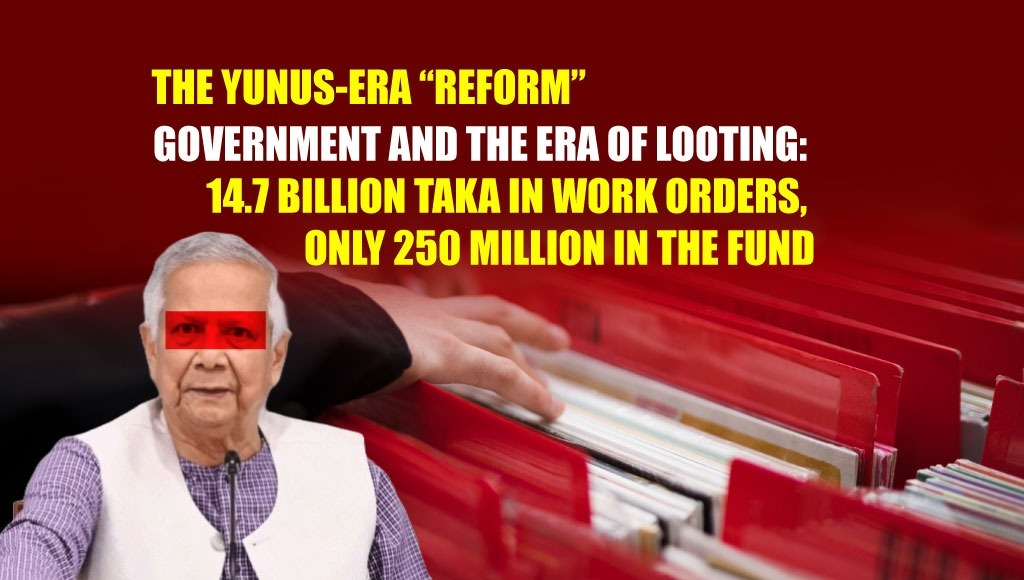
Just two days before the national election, on 10 February — the very day he was supposed to vacate his chair — he approved those 34 files. What exactly those files contained, which projects were cleared, and whose pockets were set to benefit remain unclear. But what the new administrator found upon taking charge was starkly evident: only 25 crore taka remained in the corporation’s fund, while monthly salaries alone require 13 crore.
Yet tenders and work orders worth 1,470 crore taka had already been issued.
Placed side by side, these figures raise a pressing question: were these work orders genuinely for development, or were they hurriedly distributed to specific beneficiaries before departure?
Understanding who Ejaz Mohammad was is crucial. He was appointed during the Yunus government, reportedly as a preferred choice of Asif Mahmud, who was then in charge of the Ministry of Local Government. That means everything — from the administrator’s appointment to oversight of his work — should have fallen under Asif Mahmud’s supervision. Now that the corporation’s funds appear nearly exhausted while contracts worth thousands of crores were allocated, accountability cannot rest on Ejaz alone. The man under whose authority he operated — and with whose backing he worked — must also answer questions.
While an Anti-Corruption Commission (ACC) investigation was ongoing, how did one individual remain in charge of a major city corporation like Dhaka North? The Yunus administration never provided an answer. There was no culture of accountability. Those who came to power promising reform are now gradually revealing what kind of “reform” they themselves practised.
Residents of Dhaka North pay taxes — holding taxes and various fees. Where did that money go? Roads, drainage and waste management remain in poor condition. Yet the fund is nearly empty. The numbers simply do not add up.
A full investigation is necessary — not only into Ejaz Mohammad, but into the entire administrative period: which sectors received how much money, which contractors secured how many projects, and what links those contractors may have had with the government at the time.
The BNP government is now in power. Whether such an investigation will take place remains to be seen — given its own track record on corruption. But without scrutiny, this pattern will continue. Every outgoing administration will take what it can before leaving, and every incoming government will claim its predecessor emptied the coffers.
The people of Dhaka have heard this story many times before.