
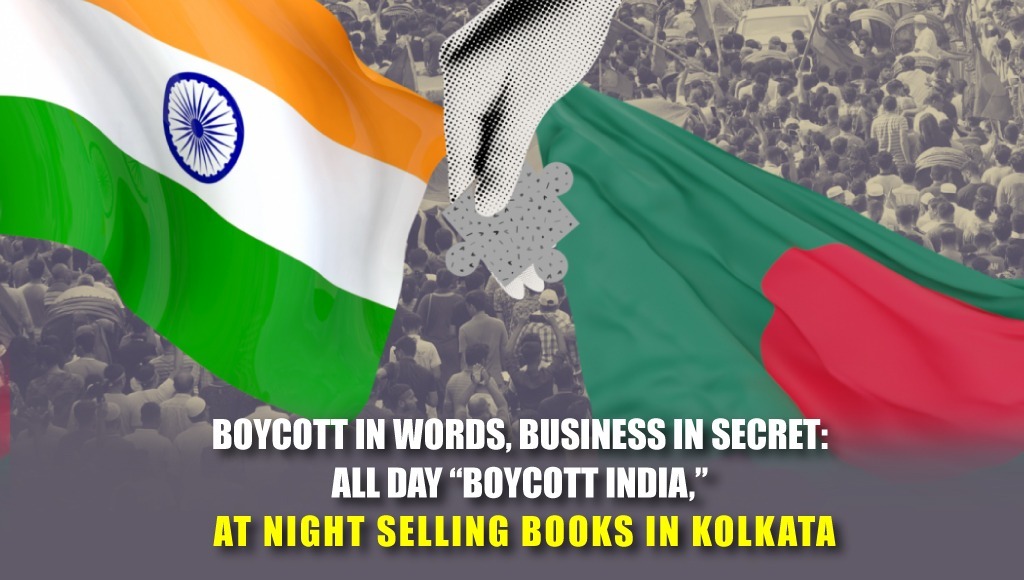

The character of Bangladesh’s publishing world that has been exposed over the past year and a half is astonishing, to say the least. On one hand, all day long there are slogans of “Boycott India” and fierce anti-India rhetoric; on the other, there is a desperate, covert scramble to secure stalls at the Kolkata Book Fair. This dual character—saying one thing publicly and doing the exact opposite in practice—has now become the true identity of a large section of Bangladesh’s cultural activists.
This year, the organizers of the Kolkata Book Fair, the Publishers and Booksellers Guild, have banned the participation of Bangladeshi publishers. There is nothing surprising about this. Publishers from a country that does not allow Indian books into its own fairs—let alone invite Indian publishers—cannot reasonably expect courtesy in return. One-sided business never lasts. If books from Kolkata are banned at the Ekushey Book Fair, then with what face would Bangladeshi publishers go to the Kolkata Book Fair?
Every year, Bangladeshi publishers used to go to Kolkata and sell books worth crores of taka. The very same publishers impose heavy tariffs on Indian books at the Ekushey Book Fair and ban Indian publishers from participating. This is blatant hypocrisy and double standards. Wanting to eat at someone else’s house but refusing to invite them to your own—what greater rudeness can there be?
Some so-called progressive writers argue that the Ekushey Book Fair is a place of emotion, and therefore only local publishers’ books should be there. What a ridiculous argument! Ekushey commemorates the Language Movement—a struggle for the Bangla language. If so, why couldn’t the shared linguistic and cultural heritage of both Bengals become the basis for a joint gathering of publishers from both sides? India’s support during the Liberation War cannot be erased from history. Yet the fair started by Chittaranjan Saha after independence has now been turned into a symbol of narrow-mindedness in the name of emotion.
The real issue is that hostility toward West Bengal’s literature emerged from the jealousy of certain writers like Ahmad Sofa. A section of Bangladeshi intellectuals has never been able to accept the stature of Kolkata’s literary and intellectual world. This inferiority complex gave rise to the policy of banning Indian books. Yet shamelessly, they continued to go to Kolkata to sell their own books. Such duplicity is unacceptable in any civilized society.
Now the Kolkata Book Fair authorities have announced that while Bangladeshi publishers cannot participate directly, Bangladeshi books may be present at stalls. What does that even mean? Will books now be smuggled through hundi channels? Will the extremist nationalist July terrorists—who cannot decide whether they hate Delhi or Dhaka—allow books to be smuggled? When they are threatening to sever all ties with India, sending books to Kolkata would be a suicidal decision for publishers.
Who was behind the nationwide riots of July 2024 is no longer a secret. With foreign funding, support from Islamist militant organizations, and backing from a section of the military, an elected government was overthrown in a coup. The principal architect of this conspiracy was Muhammad Yunus and his allies Jamaat-Shibir. Now in power, they are planning to drag the country back into the Middle Ages.
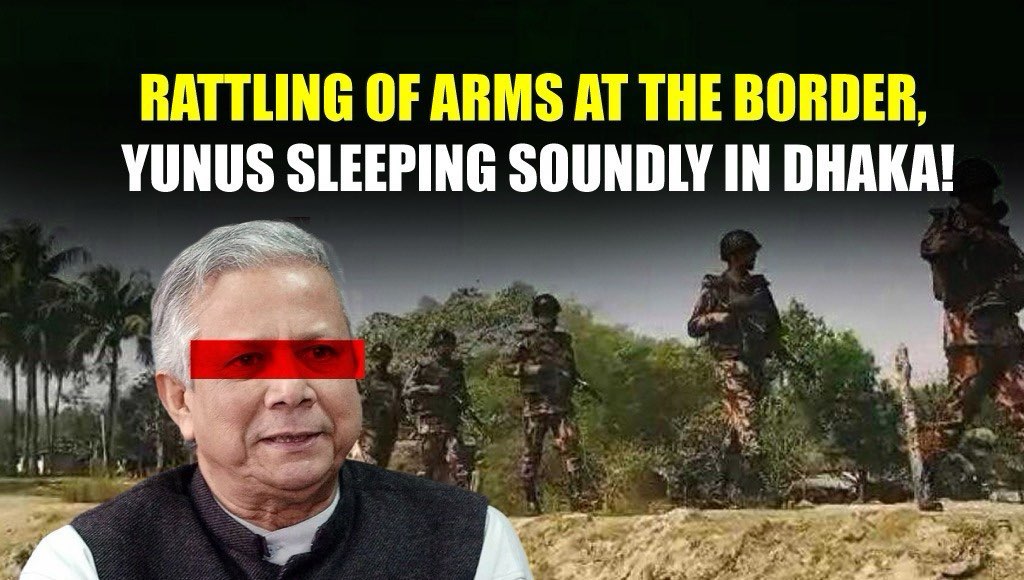
Yunus is an interest-charging moneylender. Under the guise of microcredit, the interest he extracted from the poor was higher than that of banks. Winning the Nobel Prize allowed him to present himself as a saint, but in reality he is a businessman who built his empire on the misery of the poor. Today he sits in power illegally—without elections, without democratic legitimacy—ruling solely under the shadow of the military.
By his side stands Jamaat-Shibir, an organization that opposed the Liberation War and collaborated with the Pakistani army in genocide. This party of war criminals is now a stakeholder in power. They want to establish Islamic rule. To them, a book means nothing beyond the Holy Quran. All other books are meaningless—if not dangerous.
This is why fear now surrounds the Ekushey Book Fair. With the fair taking place during Ramadan, publishers are already pessimistic, assuming that religiously fanatic Muslims will not buy books. Last year, the fair failed due to fear of mobs. There is no longer any space for thoughtful or creative books. Those in power are the spiritual heirs of Bakhtiyar Khilji. Reading or writing books has no value to them. They want blind obedience and unquestioning surrender.
The Kolkata Book Fair incident is not merely about exclusion from a book fair. It is a naked exposure of our national character. We say one thing and do the opposite. We speak against India but want to do business with India. We talk about progressivism while compromising with fundamentalists. We speak of independence but accept an illegal government born of a coup.
Our intellectuals lack the courage to protest Yunus and his cohorts’ illegal seizure of power. Instead, by remaining silent, they legitimize this illegality. Cultural activists who once spoke of democracy, free thought, and human rights are now quiet—because they know that if they speak, mobs will not spare them. Jamaat cadres will strangle them. Out of fear, they remain silent and conciliatory.
This ban by the Kolkata Book Fair has held up a mirror to us. What we see is not beautiful, nothing to be proud of. It is shameful. A country born through a Liberation War, the land of Rabindranath, Nazrul, and Jibanananda, is now held hostage by enemies of books.
If Bangladeshi publishers cannot go to the Kolkata Book Fair now, there is nothing to mourn. Rather, it is an opportunity—an opportunity to be honest with themselves, to abandon hypocrisy. If they are truly anti-India, they should not try to sell books in Kolkata. And if they want to sell books there, they must invite Indian publishers to their own fairs. One of the two must be chosen; both cannot coexist.
But our publishers likely cannot make that choice. They know those in power will pressure them. Yunus and Jamaat-Shibir do not want any cultural bridge between Bangladesh and India. They want total isolation—because isolation allows them to implement their fundamentalist agenda. If books bring people closer across borders, creating unity of thought and consciousness, their politics of division will fail.
Our intellectuals are smart enough to understand this conspiracy—but they lack courage. They know the consequences of speaking against a coup-installed government. So they remain silent, heads bowed. And this silence legitimizes illegal power.
What is happening in Bangladesh today is not democracy; it is authoritarianism. An elected government was forcibly removed. Yunus is an unelected ruler who came to power through street violence and military pressure. This was not a revolution; it was a carefully planned coup—backed by foreign money, militant violence, and a faction of the military.
What is happening now is terrifying. Free thought, free expression, creativity—everything is under threat. Whether there will even be a book fair is uncertain. And if there is one, what kinds of books will be allowed is a source of fear. Because those in power recognize only one book. All others are unnecessary—or enemies.
Bangladesh’s cultural workers, writers, and publishers are going through an extremely difficult time. Two paths lie before them: bow their heads and compromise with illegal power, or speak the truth with courage. For now, it seems most have chosen the first path—because survival and security matter. Principles and ideals do not fill empty stomachs.
The Kolkata Book Fair incident is a signal—a warning. The poison of illegal power grabs and narrow nationalism spreading through Bangladesh is affecting not only politics but culture as well. When books cannot cross borders to reach people, borders grow harder and higher, and the people on either side drift further apart. That is exactly what Yunus and Jamaat want. That is what those who seek fundamentalist rule want.
Book lovers, writers, and publishers in Bangladesh now understand that their freedom and creativity are under threat. Whether they have the strength to stand against that threat remains to be seen. The Kolkata Book Fair may be closed to them, but if the Ekushey Book Fair turns into a space of fear, mobs, and censorship, it will be an irreparable loss for the Bangla language and Bangla literature.